
Welcome to the order
In fabula veritas—Truth in fiction
Interested in regaining an appreciation for storytelling? If so, we want you to join us for a transformative literary experience as we explore what we can learn from the great books.
We are looking for storytellers pursuing beauty and truth, and through deliberate practices, we hope to make you master storytellers.
If you’re ready to learn from the greatest instructors that have ever lived, then grab your quill, pen, pencil, typewriter, laptop, or Bronze Age writing instrument and join us in the scriptorium!
Why join?
Venustas veritatem sequitur⸺Beauty follows truth.
We want to help writers put truth back into their prose by telling stories that reflect our human condition as our motto suggests⸺in fabula veritas—truth in fiction.
Our course for novices focuses on developing story sensibility. We don’t promise that you will become a published novelist or a world-renowned author, but we can promise that you’ll have the greatest instructors that have ever put pen to paper.
Our focus is on encouraging storytellers to learn the craft by discovering our neglected literary tradition.
We believe that great writing results from reading great reading!
You are my teacher, my authority;
you alone are the one from whom I took
the style whose loveliness has honored me.
⸺Dante, Inferno Trans. Anthony Esolen
Just as Dante sees Virgil as his teacher in Inferno, we too can find teachers in the great authors.
Mimetic Order doesn’t seek to copy but to inspire prose that is true and beautiful through appreciation and emulation.
Meet your writing instructors
Hunc esse fructum legendi⸺These are the fruits of reading
These are some of your instructors:

Dostoyevsky
Crime and Punishment
The Brothers Karamazov

King Lear
Hamlet

The Divine Comedy
The New Life
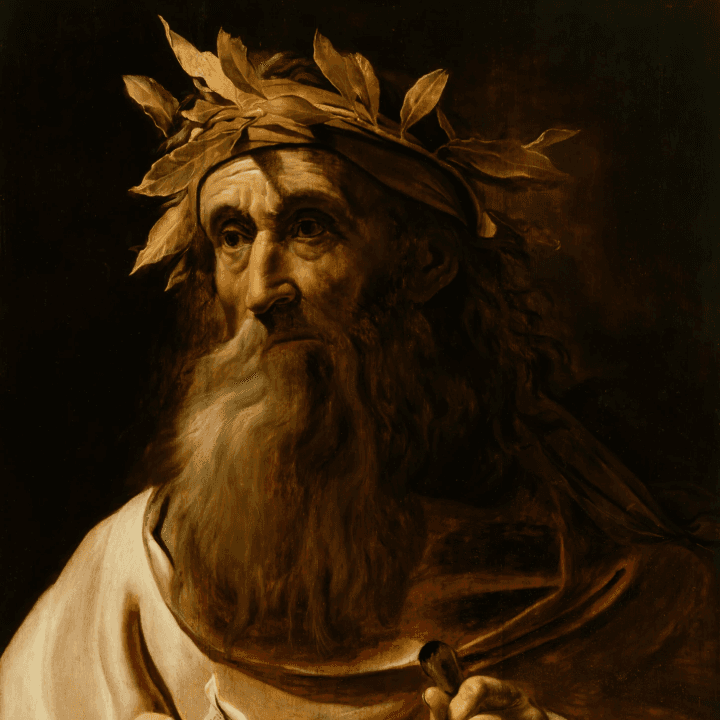
The Iliad
The Odyssey
The goal is not imitation but close appreciation that leads to emulation. Close readings that seek to appreciate our instructors’ prose and etch its greatness into our soul.
Learning strategies that help us model their skills. Aristotle, in Poetics, said that our first learning experience comes through imitation.
Think back to your first learning experiences. How many of them were the result of copying behavior? I bet many. At Mimetic Order, we believe that learning is something we discover through experience.
The greatest tool of a storyteller is not grammar, it’s not syntax, it’s not a poetic turn of phrase—truth.
Above all, then, imitation by itself is not enough⸺if only because it is the mark of a lazy talent to be content with what others have discovered.
⸺Quintilian, Institutio Oratoria
This is not plagiarism. You’re not stealing what the greats have produced to pass it off as your own creation. You’re learning and producing your own unique take. You’re not Homer, and no matter how much you try, you can’t be, for you can steal his words, but you cannot steal the experiences that shaped him.
Why don’t they attempt the same thefts themselves? They would find that it is easier to steal Hercules’ club than a line from Homer.
⸺Virgil, in Donatus, Vita Vergili
Ready to join?
Hunc esse fructum legendi⸺These are the fruits of reading
This short lesson is part of a larger course designed to help the novice writer familiarize themselves with the shape of a story. Try it yourself.
